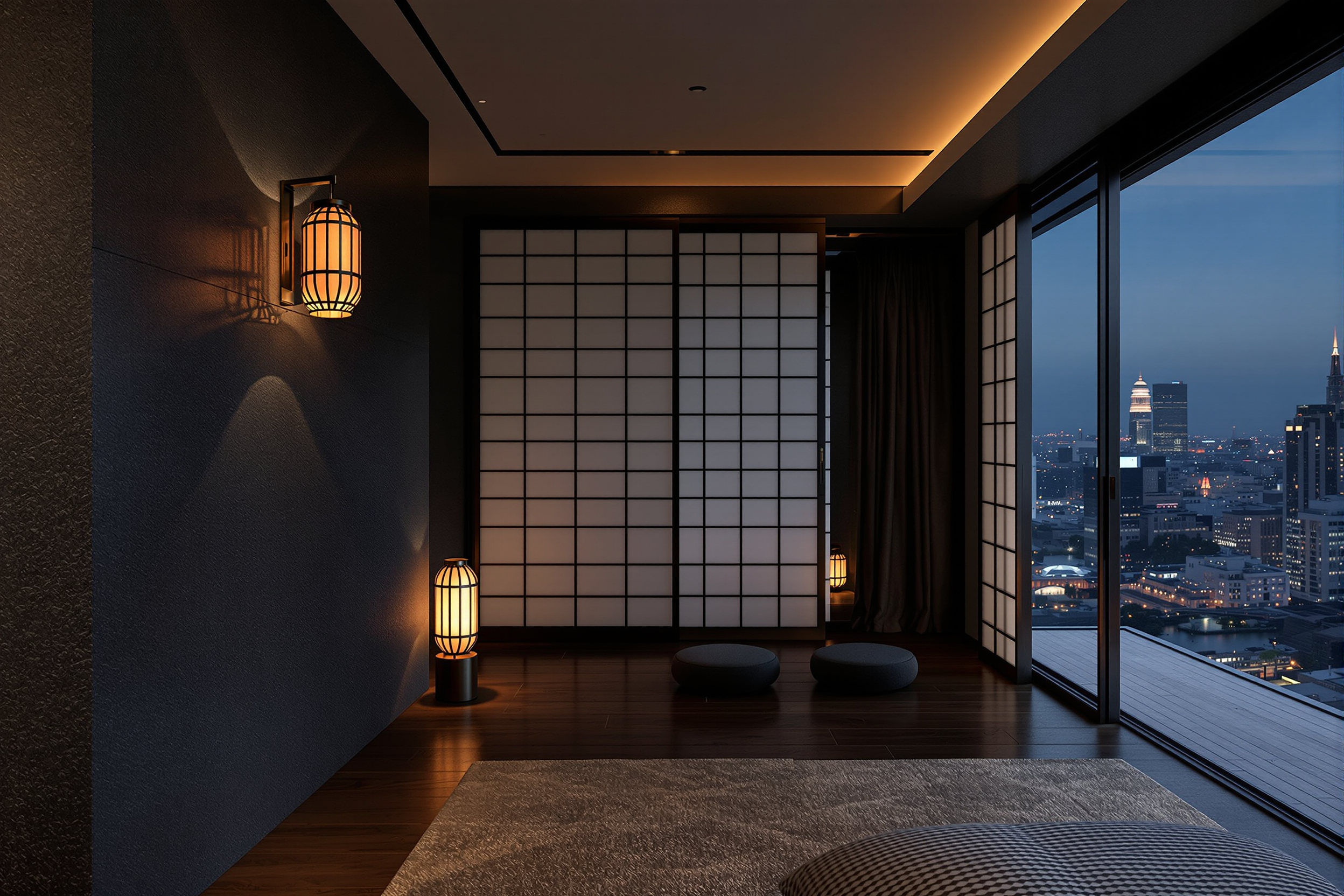
The Park Hyatt Tokyo reopened on December 9, 2025 with 171 rooms (revised from 178 pre-closure) following a 19-month closure and a renovation led by Paris-based Studio Jouin Manku. The property continues to occupy the top fourteen floors of architect Kenzo Tange's Shinjuku Park Tower, retains World of Hyatt Category 7 designation, carries Forbes Travel Guide Five-Star ratings on both the hotel and the Club on the Park spa, and serves as the structural Tokyo default for Asia-Pacific principal-stay corporate-accommodation programs.
The Park Hyatt Tokyo, the 171-key property occupying the top fourteen floors of the Cesar Pelli-designed Shinjuku Park Tower with architect Kenzo Tange acting as project architect on the broader complex, reopened to guests on December 9, 2025 following a 19-month closure that began in May 2024. The renovation, led by Paris-based Studio Jouin Manku, reworked the guestroom inventory, the 41st-floor sky lobby, the Club on the Park spa, and the 52nd-floor New York Grill and New York Bar, while retaining the building envelope, the Kenzo Tange interior architectural language, and the brand-standard 1994 program elements that have defined the Park Hyatt Tokyo since opening.
This review assesses the post-renovation property on the criteria a corporate-procurement team building a Tokyo executive-accommodation program in 2026 should actually score: rate posture and ADR positioning, World of Hyatt Category 7 award-chart math, suite-category inventory and the post-renovation 171-key footprint, F&B operator depth across the New York Grill, the New York Bar, Kozue, and Girandole, the Club on the Park spa, meeting and event inventory, location and counterparty proximity inside the Shinjuku corporate corridor, brand-standard delivery against the Park Hyatt portfolio framework, ESG-procurement posture, and the corporate-procurement use cases the property serves at the top of the Tokyo luxury segment. The framework draws on STR weekly Tokyo upper-luxury data through April 2026, Forbes Travel Guide January 2026 ratings, AAA Five Diamond designation data, GBTA Foundation procurement working-group materials on Asia-Pacific principal-stay programs from 2024 through Q1 2026, and corporate-travel reporting from Bloomberg, Skift, and Business Travel News through May 2026.
The property in brief
Park Hyatt Tokyo opened in July 1994 inside the Shinjuku Park Tower, the 235-meter mixed-use tower that occupies the southwestern corner of the Nishi-Shinjuku skyscraper district. The hotel inventory occupies floors 39 through 52, with the sky lobby on the 41st floor, the spa and pool floor on the 47th, the destination restaurants distributed across the top floors, and the guestroom and suite inventory layered through the column. The siting places the property approximately one kilometer west of Shinjuku Station and inside walking distance of the Tokyo Metropolitan Government complex, with the Mount Fuji sight line west across Tokyo and the city skyline east toward the Marunouchi financial district visible from the upper-floor inventory.
The hotel was the first Park Hyatt to open globally — the Park Hyatt brand-standard format was effectively defined by the 1994 Tokyo opening — and the property has functioned across the three decades since as the brand’s flagship and the highest-fidelity Park Hyatt brand-standard delivery property in the Hyatt portfolio. The 2024 closure was the first full shutdown the hotel has undertaken since opening, and the 19-month renovation program is the most material change to the property’s footprint and program since the original opening.
The renovation was led by Paris-based Studio Jouin Manku, the design partnership of Patrick Jouin and Sanjit Manku, who carry a global hotel and restaurant interior portfolio. The selection of Jouin Manku — rather than the continuation of the original Tony Chi interior language that defined the 1994 opening — marks a generational shift in the property’s design vocabulary, while the structural building envelope and the Kenzo Tange architectural geometry remain intact. The reopening on December 9, 2025 returned the property to active inventory inside the Hyatt distribution system, and the post-renovation rate posture, suite-category structure, and brand-standard program have stabilized through the first two quarters of post-reopening operation.
Keycount and inventory structure
The post-renovation Park Hyatt Tokyo operates 171 rooms, down from 178 keys before the May 2024 closure. The reduction reflects the consolidation of smaller-format guestrooms into larger Park Deluxe categories on the middle floors and the expansion of the suite-category footprint on the upper floors. The 171-key footprint places the property near the upper end of the Park Hyatt urban-portfolio inventory band, in line with the Park Hyatt Paris-Vendôme (153 keys) and the Park Hyatt Sydney (155 keys) but below the larger Park Hyatt New York (208 keys) format.
The post-renovation rate ladder operates the following inventory tiers. The Park Room category, the entry tier, sits on the middle hotel floors with city-view aspect across the Shinjuku skyscraper district and the western Mount Fuji axis. The Park Deluxe Room category, the next category up, operates with a larger guestroom footprint and an enhanced in-room program. The Park Suite category, the entry-suite tier, operates on the upper floors with separate living and bedroom areas, with city-view or Mount Fuji-view aspect depending on the room number. The Diplomat Suite and Presidential Suite categories operate at the upper-suite tier with expanded living, dining, and study layouts. The signature Tokyo Suite at the top of the inventory anchors the property’s principal-stay-tier procurement use case.
The post-renovation rate ladder is consistent with the broader Tokyo luxury segment’s post-2024 inventory recalibration. The Aman Tokyo (84 keys), The Tokyo EDITION Toranomon (206 keys), the Bulgari Hotel Tokyo (98 keys), the Janu Tokyo (122 keys, opened 2024), and the Mandarin Oriental Tokyo (179 keys) all operate inventory bands within range of the post-renovation Park Hyatt Tokyo 171-key footprint. The segment’s structural rate-and-suite recalibration through 2024 and 2025 has positioned the Tokyo luxury market for materially higher suite-tier and entry-tier ADR through 2026 than the pre-2020 baseline, and the Park Hyatt Tokyo’s post-renovation rate posture is positioned in line with this segment-wide repositioning.
Rate posture and corporate-account procurement
Published ADR at Park Hyatt Tokyo post-renovation tracks approximately USD 1,420 through Q1 2026 per STR Tokyo upper-luxury chain-scale data, positioning the property in the top quartile of the Tokyo luxury segment. The Park Room entry-category rate posture has moved materially above the pre-closure baseline, in line with the segment’s broader 2024-2025 repositioning across the Aman Tokyo, the Bulgari Hotel Tokyo, the Janu Tokyo, and the Mandarin Oriental Tokyo. Suite-tier rates have moved in line with the entry-category repositioning, and the rate ladder operates inside the top decile of the Asia-Pacific Park Hyatt portfolio.
Corporate-account discounting at Park Hyatt Tokyo follows the Hyatt corporate-rate program structure. Negotiated corporate rates at the 200-plus annual-room-night threshold typically run 10 to 20 percent off published BAR on the Park Room and Park Deluxe categories, with suite-tier inventory operating outside the negotiated-rate floor and the Tokyo Suite operating on a price-on-application basis for principal-stay block bookings. The corporate-procurement conversation at the property typically runs on three axes: Park Room and Park Deluxe negotiated-rate posture for two-night-and-shorter executive-travel stays, suite-block availability guarantees for principal-and-team Tokyo visits, and World of Hyatt Globalist status recognition for repeating travelers who anchor a portion of their Asia-Pacific travel pattern on Tokyo.
The property’s corporate-procurement conversation has stabilized through the first two quarters of post-reopening operation. The pre-closure customer base — composed of large publicly-listed-company executive-travel programs, family-office and ultra-high-net-worth travel programs, and Asia-Pacific regional-headquarters principal-stay programs — returned to the property in volume in Q1 and Q2 2026. Distribution through the Hyatt corporate channels (Hyatt Connect, the corporate-rate console, and the Privé travel-advisor program) reactivated immediately upon the December 9, 2025 reopening, and corporate-account booking inventory has stabilized inside the brand’s normal post-renovation ramp curve.
For corporate-procurement programs scoring properties on transparent percentage-off-BAR discount arithmetic, the Park Hyatt Tokyo’s negotiated-rate posture at the entry-category tier is in line with the Park Hyatt brand norm and competitive against the Mandarin Oriental Tokyo and The Tokyo EDITION Toranomon negotiated-rate posture. For programs scoring properties on suite-tier discretion and brand-standard delivery, the Park Hyatt Tokyo operates the most developed posture in the Tokyo luxury segment.
World of Hyatt award-chart math
Park Hyatt Tokyo carries World of Hyatt Category 7 designation. The Category 7 award-chart band produces 25,000-point off-peak, 30,000-point standard, and 35,000-point peak redemption pricing on the Park Room category. Suite redemption math runs higher and is gated by the property’s Suite Upgrade Award and dedicated-suite-redemption inventory release.
The Category 7 ceiling places the Park Hyatt Tokyo inside the World of Hyatt Category 1-7 Free Night Certificate redemption band — the structural award-chart benefit that distinguishes Tokyo from the Park Hyatt Sydney (Category 8, outside the Free Night Certificate redemption ceiling) and the Park Hyatt Maldives Hadahaa (Category 8). For Globalist-anchored corporate-travel programs that accumulate Free Night Certificates through the Milestone Rewards program, Park Hyatt Tokyo is one of the highest-value Free Night Certificate redemption targets in the global Hyatt portfolio. The Category 1-7 Free Night Certificate at off-peak pricing against the $1,420 ADR baseline produces approximately $1,080 in cash value, in line with the strongest Free Night Certificate outcomes of any Park Hyatt property.
Cents-per-point math against the $1,420 ADR baseline runs 3.9 to 5.7 cpp on the Park Room category at off-peak to standard redemption pricing. Stack a confirmed Suite Upgrade Award onto an off-peak award booking and the math compounds to 6.5 to 8.2 cpp on the Park Suite. The Suite Upgrade Award success rate at Park Hyatt Tokyo runs in the brand-typical middle band based on Globalist member reporting through Q1 2026; the property’s deeper suite inventory post-renovation has improved the structural Suite Upgrade Award confirmation rate relative to the pre-closure baseline.
The Globalist breakfast benefit at Park Hyatt Tokyo delivers retail-rate value across the Girandole all-day Mediterranean breakfast or the New York Grill breakfast election, depending on the day-of-stay availability. The breakfast benefit value runs in the upper band of the global Hyatt portfolio reflecting Tokyo’s high in-property F&B pricing and the brand’s premium breakfast positioning. Combined with the Category 7 award-chart math, the Free Night Certificate redemption ceiling, and the Suite Upgrade Award stackability, the Park Hyatt Tokyo operates the strongest combined Globalist-tier procurement outcome of any Park Hyatt property and one of the strongest in the World of Hyatt portfolio.
Suite categories and in-room product
The 171-key inventory operates across the suite categories detailed below, each tied to a specific floor band and aspect within the Shinjuku Park Tower footprint.
The Park Room category, the entry tier, operates on the middle hotel floors with city-view aspect across the Shinjuku skyscraper district and the western Mount Fuji axis. The post-renovation in-room program retains the brand-standard layout — separate working area, dressing area, and bathroom — with a refreshed material palette designed by Jouin Manku and Park Hyatt-signature bedding. The Park Room is the corporate-procurement entry point at the property and the room category most frequently booked at the negotiated-rate floor for two-night-and-shorter executive-travel stays.
The Park Deluxe Room category operates with a larger guestroom footprint and the enhanced in-room program. The category is the most-frequently-booked corporate-procurement upgrade tier for repeating Park Hyatt Tokyo travelers who anchor a portion of their Asia-Pacific travel on the property and who weight the larger in-room working footprint as the procurement consideration.
The Park Suite category, the entry-suite tier, operates on the upper floors with separate living and bedroom areas and city-view or Mount Fuji-view aspect depending on the room number. The Park Suite is the corporate-procurement default for principal-stay use cases inside the suite tier and the most-frequently-blocked category for two-night-and-longer principal stays where the suite-as-working-space format is the binding consideration.
The Diplomat Suite and Presidential Suite categories operate at the upper-suite tier with expanded living, dining, and study layouts. The categories are the most-frequently-booked principal-and-family suite categories at the property and the principal-stay-tier procurement defaults for visiting-principal stays where the larger suite footprint anchors the booking.
The Tokyo Suite at the top of the inventory operates as the property’s signature top-floor suite product. The Tokyo Suite is the procurement default for principal-and-team multi-room blocks, family-office and ultra-high-net-worth travel programs, and the cross-Park Hyatt brand-standard recognition tier where the Park Hyatt Tokyo’s role as the brand’s flagship anchors the booking.
The in-room product across all suite categories applies the post-renovation Jouin Manku material palette, the refreshed brand-standard bedding program, and integrated AV with strong acoustic privacy across the suite tier. Public-facing Park Hyatt Tokyo material confirms the post-renovation in-room program; specific suite-room dimensions are published on the property’s official rate-and-room console and corporate-procurement teams should verify category-specific dimensions against the Park Hyatt Tokyo published material at the booking stage.
Food and beverage
The Park Hyatt Tokyo F&B program operates across the signature New York Grill and New York Bar on the 52nd floor, Kozue Japanese restaurant on the 40th floor, Girandole all-day Mediterranean restaurant on the 41st floor, the Peak Lounge in the 41st-floor sky lobby, and the residents’ Library lounge. The program is the most-developed in-house F&B footprint of any Park Hyatt property globally and one of the deepest in-property F&B programs in the Tokyo luxury segment.
The New York Grill, the property’s signature destination restaurant on the 52nd floor, was re-engineered in the renovation under chef de cuisine Ben Wheeler with full-service dinner programming. The room retains the proportions and the Kenzo Tange architectural language of the 1994 opening, with the Sofia Coppola Lost in Translation cinematic-cultural anchor that has defined the room’s public profile since the 2003 release of the film. The wine program at the New York Grill operates one of the deepest hotel wine cellars in Tokyo with depth across French Burgundy, French Bordeaux, Italian, Californian, and premium Japanese single-malt selections. The New York Grill is the property’s most-frequently-booked corporate principal-dinner venue and the most-frequently-cited F&B program element in corporate-procurement-program reviews.
The New York Bar, the 52nd-floor bar adjacent to the New York Grill, was preserved in proportion and rebuilt in detail in the renovation. The Kenzo Tange-designed ceiling and the live music program — anchored by the bar’s long-running jazz residency — remain intact, and the bar continues to operate as one of the most-recognized hotel bars globally. The bar’s beverage program covers a deep premium whisky selection with both international and Japanese single-malt inventory, alongside the signature New York Bar cocktail program. Cover-charge structure and live-music programming follow the property’s published format.
Kozue, the Japanese restaurant on the 40th floor, operates a kaiseki and Japanese-traditional program with Tokyo-skyline view aspect and a private-dining inventory suitable for corporate-procurement bookings. Girandole, the all-day Mediterranean restaurant on the 41st floor, operates as the property’s breakfast room and all-day dining environment with an open-format layout. The Peak Lounge in the 41st-floor sky lobby operates as an afternoon-tea and lounge environment with the most-recognized 41st-floor architectural anchor — the double-height greenhouse-style space — that defines the Park Hyatt Tokyo’s brand-standard public-space aesthetic.
The residents’ Library, refreshed in the renovation, operates as a quiet lounge environment on the 41st floor with a curated book and periodical program. The Library is one of the property’s most-recognized brand-standard public spaces and the most-frequently-used residents-only quiet-work environment at the property.
Club on the Park spa and the wellness program
The Club on the Park spa on the 47th floor operates the property’s wellness program across treatment rooms, the indoor pool, and the dedicated fitness floor. The spa was refreshed in the renovation under the Jouin Manku design language while retaining the structural pool-and-spa footprint that has defined Club on the Park since the 1994 opening. The Forbes Travel Guide January 2026 ratings confirmed the Five-Star designation on Club on the Park, retaining the property’s distinction as one of the few Tokyo hotels operating the Forbes Five-Star rating on both the hotel and the spa.
The pool on the 47th floor — a Tokyo-skyline-view indoor pool that anchors the property’s wellness-program identity — was refreshed in the renovation and continues to operate as one of the most-photographed hotel pools in Tokyo. The fitness floor adjacent to the pool operates the brand-standard strength and cardio equipment program with the Tokyo-skyline aspect across the western Mount Fuji axis.
The spa is a meaningful corporate-procurement consideration for executive-travel programs where wellness-program integration is part of the principal’s travel routine. The Club on the Park’s combination of the Forbes Five-Star spa rating, the signature pool environment, and the Tokyo-skyline view aspect places the spa in the upper band of the Tokyo luxury segment for the wellness-program-integrated principal-stay procurement use case.
Meeting and event inventory
Park Hyatt Tokyo’s meeting and event inventory is positioned for principal-stay-anchored corporate use rather than full-floor meeting-program use. The Ballroom on the 41st floor operates as the property’s largest event environment with the brand-standard wedding, corporate-event, and reception format. A small number of dedicated meeting rooms on the 41st floor support the brand-standard format for executive-meeting bracketing alongside the principal-stay program. The Park Hyatt Tokyo’s meeting inventory is structurally smaller than the dedicated full-floor meeting programs the Mandarin Oriental Tokyo and The Tokyo EDITION Toranomon operate, and corporate procurement programs running large investor-day-tier blocks at the 100-plus-attendee bracket typically route those events to the Conrad Tokyo or the Tokyo American Club and use Park Hyatt Tokyo for the principal-stay component.
For corporate programs running boardroom-scale meetings — 10-to-20-attendee executive sessions, principal-and-counterparty working meetings, and small-format private-dining-bracketed meetings — the Park Hyatt Tokyo’s meeting inventory and the in-suite working footprint at the Park Suite, Diplomat Suite, Presidential Suite, and Tokyo Suite tiers provide the working format the principal-stay-tier procurement program requires.
The boardroom-scale posture suits the property’s structural corporate-procurement role: principal-stay-anchored Tokyo accommodation programs where the suite-and-F&B format is the binding consideration and the meeting-floor inventory is routed elsewhere. For corporate programs operating the meeting and principal-stay components on the same property, the larger Mandarin Oriental Tokyo, The Tokyo EDITION Toranomon, and Conrad Tokyo formats are the better-fit procurement options.
Location and counterparty proximity
The Park Hyatt Tokyo’s siting at the southwestern corner of the Nishi-Shinjuku skyscraper district places the property inside the Shinjuku corporate corridor and within structured commute time to the Marunouchi and Otemachi financial-district concentrations. Walk-time to Shinjuku Station, the highest-throughput rail interchange in Tokyo and the world, runs approximately twelve-to-fifteen minutes from the property. Drive-time to the Marunouchi financial-district trading floors runs approximately twenty-to-thirty minutes under typical traffic conditions. Drive-time to Roppongi Hills and the Toranomon Hills corporate concentration runs approximately fifteen-to-twenty-five minutes.
For Asia-Pacific principal-stay corporate-travel programs scoring properties on Tokyo financial-district proximity, the Park Hyatt Tokyo is positioned outside the Marunouchi-Otemachi walking radius (the Mandarin Oriental Tokyo, the Four Seasons Tokyo at Marunouchi, and the Aman Tokyo operate inside the Marunouchi walking radius). For programs scoring properties on Shinjuku corporate corridor proximity, the property is positioned inside the corridor and within walking distance of the Tokyo Metropolitan Government complex and the major Nishi-Shinjuku corporate headquarters concentrations.
Drive-time to Haneda Airport runs approximately thirty-to-forty-five minutes under typical traffic conditions, with the option to use the airport limousine bus that operates direct service to the Shinjuku Park Tower from Haneda and Narita. Drive-time to Narita Airport runs approximately sixty-to-ninety minutes under typical traffic conditions. The Narita Express rail service from Shinjuku Station provides the alternative public-transit airport-transfer option.
Brand-standard delivery and the Park Hyatt portfolio framework
Park Hyatt Tokyo delivers the brand-standard rubric at the upper bound of the Park Hyatt global portfolio. The 1994 opening effectively defined the brand-standard format — quiet luxury, residents’ library, sky-lobby tea program, signature destination-restaurant top-floor placement, and the integrated spa-and-pool floor — and the property has functioned across the three decades since as the brand’s flagship.
The Park Hyatt brand-standard rubric scores against five anchor elements: a signature destination restaurant under a chef-of-record program, a residents’ library quiet-lounge environment, a top-tier Forbes Travel Guide-rated spa with hydrotherapy or pool programming, an icon-view rubric tied to the property’s siting, and a curated cross-portfolio cultural-program integration. Park Hyatt Tokyo scores at the upper bound on all five rubrics. The New York Grill under chef de cuisine Ben Wheeler is the signature destination restaurant; the Library on the 41st floor is the residents’ library; Club on the Park carries the Forbes Five-Star spa rating; the Mount Fuji and Tokyo skyline sight lines deliver the icon-view rubric without ambiguity; and the New York Bar’s jazz residency and the property’s broader cultural integration through Sofia Coppola’s Lost in Translation anchors the cultural-program element.
The Park Hyatt Tokyo’s brand-standard delivery places the property at the top of the brand’s global portfolio across the rubric. The post-renovation refresh under Studio Jouin Manku has updated the material palette and the public-space program while preserving the structural brand-standard elements that have defined the property since the 1994 opening, which is the design-brief outcome the renovation was structured to deliver.
ESG-procurement posture
The Park Hyatt Tokyo operates the Hyatt parent-brand sustainability commitments — published at the group level with milestones aligned with the 2030 corporate sustainability targets — and reports environmental performance through the broader Hyatt sustainability disclosure program. The post-renovation mechanical, electrical, and plumbing systems upgrade undertaken during the 19-month closure has materially improved the property’s emissions-intensity profile relative to the pre-2024 baseline.
For ESG-procurement teams scoring properties on parent-brand sustainability commitment depth and post-renovation building-systems modernization, the Park Hyatt Tokyo carries a solid mid-tier posture inside the Tokyo luxury segment. The Mandarin Oriental Tokyo and The Tokyo EDITION Toranomon operate more developed publicly-available property-level disclosure data; the Park Hyatt Tokyo’s parent-brand sustainability program provides the cross-portfolio commitment depth that ESG-aligned corporate-procurement teams have begun to score favorably, while property-level disclosure transparency at the Park Hyatt Tokyo continues to develop through the post-renovation reporting cycle.
For procurement teams scoring properties on the energy-intensity reduction outcome of the renovation, the 19-month full-property closure created the structural window for the deepest building-systems modernization the property has undertaken since opening, and the post-renovation building-systems profile is materially stronger than the pre-2024 baseline.
Forbes Travel Guide and AAA designation
Forbes Travel Guide’s January 2026 ratings retained Park Hyatt Tokyo’s Five-Star designation on both the hotel and the Club on the Park spa, retaining the property’s distinction as one of only four Park Hyatt properties carrying the Five-Star designation on both rubrics (the Park Hyatt Paris-Vendôme, the Park Hyatt Sydney, and the Park Hyatt Maldives Hadahaa are the other three). The Forbes Five-Star designation on both rubrics is the strongest combined-rating outcome the property has carried, and the January 2026 ratings refresh confirmed the post-renovation property at the Five-Star band without delay.
The AAA Five Diamond designation framework does not extend to international properties; the AAA Five Diamond program is anchored on U.S., Canada, Mexico, and the Caribbean. The Park Hyatt Tokyo’s Forbes Five-Star designation functions as the equivalent independent third-party rating anchor for the corporate-procurement program scoring the property’s brand-fidelity tier.
The Forbes Five-Star Club on the Park spa rating is particularly meaningful for the wellness-program-integrated corporate-procurement use case. Forbes’ January 2026 ratings release continued the trend of declining Five-Star designations across the global hotel spa segment, and the Park Hyatt Tokyo’s retention of the Five-Star spa rating through the post-renovation refresh demonstrates the structural brand-standard depth the property carries on the spa rubric.
Corporate-procurement use cases
Park Hyatt Tokyo anchors a set of corporate-procurement use cases that the broader Tokyo luxury segment does not operate as competitively. The use cases that the property serves at the structural-default tier in 2026 are detailed below.
The Asia-Pacific principal-stay corporate-accommodation program. For corporate-travel programs anchored on Asia-Pacific principal-stay accommodation where Tokyo is one of multiple Asia-Pacific anchor cities (Hong Kong, Singapore, Seoul, Shanghai, Tokyo), the Park Hyatt Tokyo is the structural Tokyo default. The combination of the Category 7 World of Hyatt award-chart designation, the Forbes Five-Star hotel and spa rating, and the brand-standard delivery depth makes the property the strongest single-property Tokyo procurement choice for the principal-stay-tier program.
The Globalist-anchored corporate-travel program. For corporate-travel programs anchored on World of Hyatt Globalist-tier accumulation across the Hyatt global portfolio, the Park Hyatt Tokyo is one of the highest-value Tokyo redemption targets. The Category 7 designation, the Suite Upgrade Award stackability, and the Free Night Certificate redemption ceiling produce the strongest combined Globalist outcome of any Park Hyatt property and one of the strongest in the global Hyatt portfolio.
The family-office and ultra-high-net-worth Tokyo principal-stay program. For family-office and ultra-high-net-worth travel programs operating principal-stay-tier Tokyo accommodation, the Park Hyatt Tokyo’s Tokyo Suite and the Diplomat and Presidential Suite categories provide the most-developed brand-standard suite product in the Tokyo luxury segment. The cross-Park Hyatt recognition for principals who travel across the brand’s global portfolio adds the brand-standard continuity that the family-office segment weights as the procurement consideration.
The Park Hyatt brand-fidelity corporate-procurement program. For corporate-procurement programs anchored on Park Hyatt brand-standard delivery across multiple global Park Hyatt properties — corporate programs that block Park Hyatt Paris-Vendôme, Park Hyatt Sydney, Park Hyatt New York, and Park Hyatt Tokyo as the brand-fidelity anchor program — the Park Hyatt Tokyo functions as the flagship and the highest-fidelity brand-standard delivery property in the program. The 1994 opening’s role in defining the Park Hyatt brand-standard format anchors the brand-fidelity procurement use case at the property.
The Tokyo F&B-anchored executive-entertainment program. For corporate-travel programs scoring Tokyo properties on in-house F&B-anchored executive-entertainment programming — corporate dinners, principal-and-counterparty meetings bracketed with in-property dining, and the broader F&B-anchored entertainment program — the Park Hyatt Tokyo’s combination of the New York Grill, the New York Bar, Kozue, and Girandole provides the deepest in-house F&B program in the Tokyo luxury segment.
Comparable properties in the Tokyo luxury segment
The Tokyo luxury segment in 2026 operates a deeper top-tier than at any prior moment in the city’s hospitality history. The post-2024 segment expansion has added the Janu Tokyo (122 keys, opened 2024), the Bulgari Hotel Tokyo (98 keys, opened 2023), and the Capella Tokyo (86 keys, opened 2024) to the established top-tier inventory anchored by the Mandarin Oriental Tokyo (179 keys), The Tokyo EDITION Toranomon (206 keys), The Tokyo EDITION Ginza (86 keys), the Four Seasons Tokyo at Marunouchi (57 keys), the Four Seasons Tokyo at Otemachi (190 keys), the Aman Tokyo (84 keys), The Peninsula Tokyo (314 keys), and the Park Hyatt Tokyo (171 keys post-renovation).
Within this deeper top-tier, the Park Hyatt Tokyo operates a structurally differentiated position. The Mandarin Oriental Tokyo competes most directly with the Park Hyatt Tokyo on the principal-stay-tier procurement use case and operates a more-developed full-floor meeting program. The Aman Tokyo operates a smaller, more-discretion-anchored inventory and is the procurement default for the family-office and sovereign-wealth segment where the rate posture is not the binding consideration. The Four Seasons Tokyo at Marunouchi and the Aman Tokyo operate inside the Marunouchi walking radius and are the procurement defaults for the corporate-procurement program where Marunouchi proximity is the binding consideration. The Janu Tokyo, the Bulgari Hotel Tokyo, and the Capella Tokyo operate as the newer-format challenger properties at the top of the segment.
For corporate-procurement programs scoring the Tokyo luxury segment on the principal-stay-tier outcome alone, the Park Hyatt Tokyo is in the top tier alongside the Mandarin Oriental Tokyo, the Aman Tokyo, and the Four Seasons Tokyo at Marunouchi. For programs scoring on the Park Hyatt brand-standard delivery, the World of Hyatt Category 7 award-chart designation, and the Free Night Certificate redemption ceiling, the Park Hyatt Tokyo operates the structural Tokyo default position.
The post-renovation outcome
The 19-month closure and the Jouin Manku renovation have not reinvented the Park Hyatt Tokyo. The renovation has refreshed the property’s material palette and the public-space program while preserving the structural brand-standard elements — the Kenzo Tange architectural language, the 52nd-floor New York Grill and New York Bar program, the 41st-floor sky lobby and the Library, the Club on the Park spa, and the suite-tier inventory structure — that have defined the property since the 1994 opening.
The post-renovation rate posture is materially above the pre-closure baseline, in line with the broader Tokyo luxury segment’s 2024-2025 repositioning. The World of Hyatt Category 7 designation has been retained, preserving the Free Night Certificate redemption ceiling that anchors the property’s award-chart math. The Forbes Travel Guide January 2026 ratings retained the Five-Star designation on both the hotel and the Club on the Park spa. The brand-standard delivery rubric continues to score at the upper bound of the Park Hyatt global portfolio.
For corporate-procurement programs building a 2026 Tokyo executive-accommodation framework, the Park Hyatt Tokyo’s post-renovation footprint operates the strongest combined brand-standard, award-chart, and F&B-anchored procurement outcome in the Tokyo luxury segment for the principal-stay-tier and Globalist-anchored use cases. The property’s role as the Park Hyatt flagship and the highest-fidelity brand-standard delivery property in the global Hyatt portfolio has been preserved through the renovation, and the post-reopening operational ramp has stabilized inside the brand’s normal post-renovation curve through the first two quarters of 2026.
The Park Hyatt Tokyo remains the structural Tokyo default for the Park Hyatt brand-fidelity corporate-procurement program, the highest-value Globalist redemption target in the Tokyo luxury segment, and the most-recognized hotel F&B program — anchored by the New York Bar and the New York Grill — in any Tokyo luxury hotel. The 2024-2025 renovation has reset the property’s material palette for the next chapter without disrupting the structural brand-standard elements that have defined the Park Hyatt Tokyo since 1994. For corporate-travel programs anchored on Tokyo principal-stay accommodation in 2026, the property is the procurement default the segment has operated since the original opening.
Frequently Asked Questions
- When did the Park Hyatt Tokyo reopen after its renovation, and what was the closure timeline?
- The Park Hyatt Tokyo closed to guests in May 2024 and reopened on December 9, 2025 following a 19-month renovation program led by Paris-based Studio Jouin Manku. The closure was the first full-property shutdown since the hotel opened in 1994 on the top fourteen floors of architect Kenzo Tange's Shinjuku Park Tower. The renovation reworked the guestroom inventory, the public spaces on the 41st-floor sky lobby, the Club on the Park spa, and the 52nd-floor New York Grill and New York Bar, while retaining the original Kenzo Tange architectural language and the Cesar Pelli-designed building envelope that defines the Park Hyatt Tokyo's brand-standard icon-view rubric across the Tokyo luxury segment.
- How many rooms does the Park Hyatt Tokyo operate post-renovation, and what suite categories anchor the rate ladder?
- The Park Hyatt Tokyo operates 171 rooms post-renovation, down from 178 keys before the May 2024 closure. The rate ladder runs Park Room at the entry tier, Park Deluxe Room at the next category up, Park Suite at the entry-suite tier, Diplomat Suite and Presidential Suite at the upper-suite tiers, and the signature Tokyo Suite at the top of the inventory. The reduction in keycount reflects the consolidation of smaller-format guestrooms into larger Park Deluxe categories and the expansion of the suite-category footprint on the upper floors, which is consistent with the broader Tokyo luxury segment's post-2024 inventory recalibration toward suite-anchored rate structures.
- What are the Park Hyatt Tokyo's published rates and World of Hyatt award-chart positioning in 2026?
- Published rates at Park Hyatt Tokyo post-renovation track approximately USD 1,420 ADR through Q1 2026 per STR Tokyo upper-luxury chain-scale data, with the Park Room entry category positioned above the pre-closure baseline and the suite ladder repositioned in line with the post-renovation rate posture. The property carries World of Hyatt Category 7 designation, which produces 25,000-point off-peak, 30,000-point standard, and 35,000-point peak redemption pricing. The Category 7 ceiling places the property inside the Category 1-7 Free Night Certificate redemption band, the structural award-chart benefit that distinguishes Tokyo from the Park Hyatt Sydney (Category 8) and other higher-tier Park Hyatt properties. Cents-per-point math against the $1,420 ADR baseline runs 3.9 to 5.7 cpp on the Park Room category and compounds higher on the Park Suite when a Suite Upgrade Award confirms.
- What F&B and meeting-space program does the Park Hyatt Tokyo operate for corporate use post-renovation?
- The signature destination restaurant at Park Hyatt Tokyo is the New York Grill on the 52nd floor, re-engineered in the renovation under chef de cuisine Ben Wheeler with full-service dinner programming. The adjacent New York Bar was preserved in proportion and rebuilt in detail in the renovation, retaining the Kenzo Tange-designed ceiling that defines the room. The 41st-floor sky lobby anchors the Library residents' lounge and the Peak Lounge. The hotel also operates Girandole as the all-day Mediterranean restaurant on the 41st floor and Kozue as the Japanese restaurant on the 40th floor. Meeting and event inventory at the property is positioned for principal-stay-anchored corporate use rather than full-floor meeting-program use; the Ballroom on the 41st floor and a small number of dedicated meeting rooms support the brand-standard format for executive-meeting bracketing alongside the principal-stay program.
- What corporate-procurement use cases does the Park Hyatt Tokyo anchor in 2026?
- Park Hyatt Tokyo functions as the structural Tokyo default for Asia-Pacific principal-stay corporate-accommodation programs and the highest-fidelity Park Hyatt brand-standard delivery property in the Hyatt portfolio. The property's siting in Shinjuku — west of the Tokyo Imperial Palace and adjacent to the Tokyo Metropolitan Government building — places it inside the Shinjuku corporate corridor and within structured drive-time to the Marunouchi and Otemachi financial-district concentrations. For Globalist-anchored corporate-travel programs, the Category 7 award-chart designation and Forbes Travel Guide Five-Star Club on the Park spa rating produce the strongest combined points-and-status outcome in the Park Hyatt portfolio. For procurement programs anchored on suite-tier discretion and Tokyo brand-fidelity, the New York Bar and New York Grill provide the most-recognized brand-anchored F&B program at any Tokyo luxury hotel.